


We can't find the internet
Attempting to reconnect
Something went wrong!
Hang in there while we get back on track
Manfred Erjautz - Under the Weight of Light and Fragments of Beauty
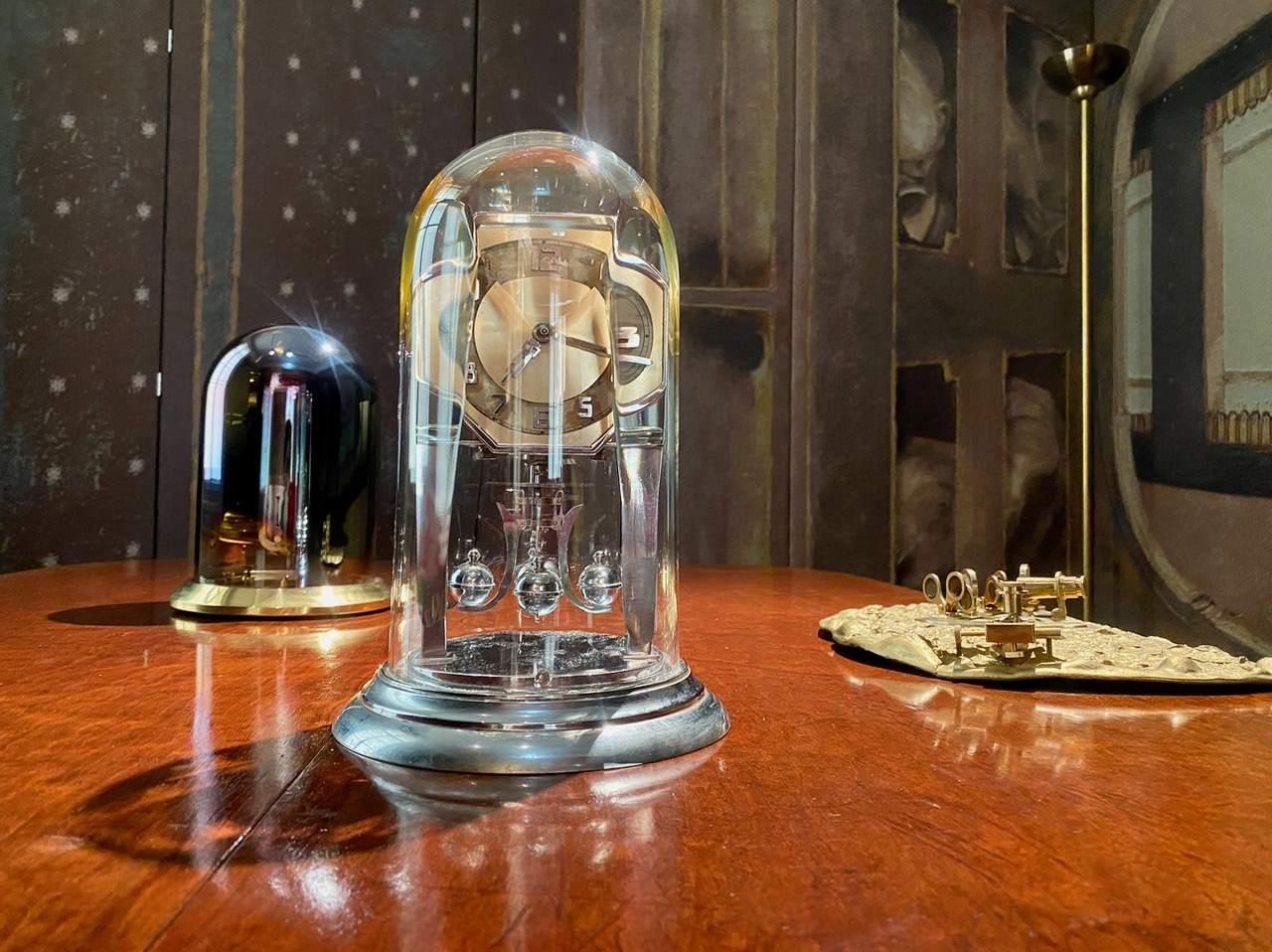
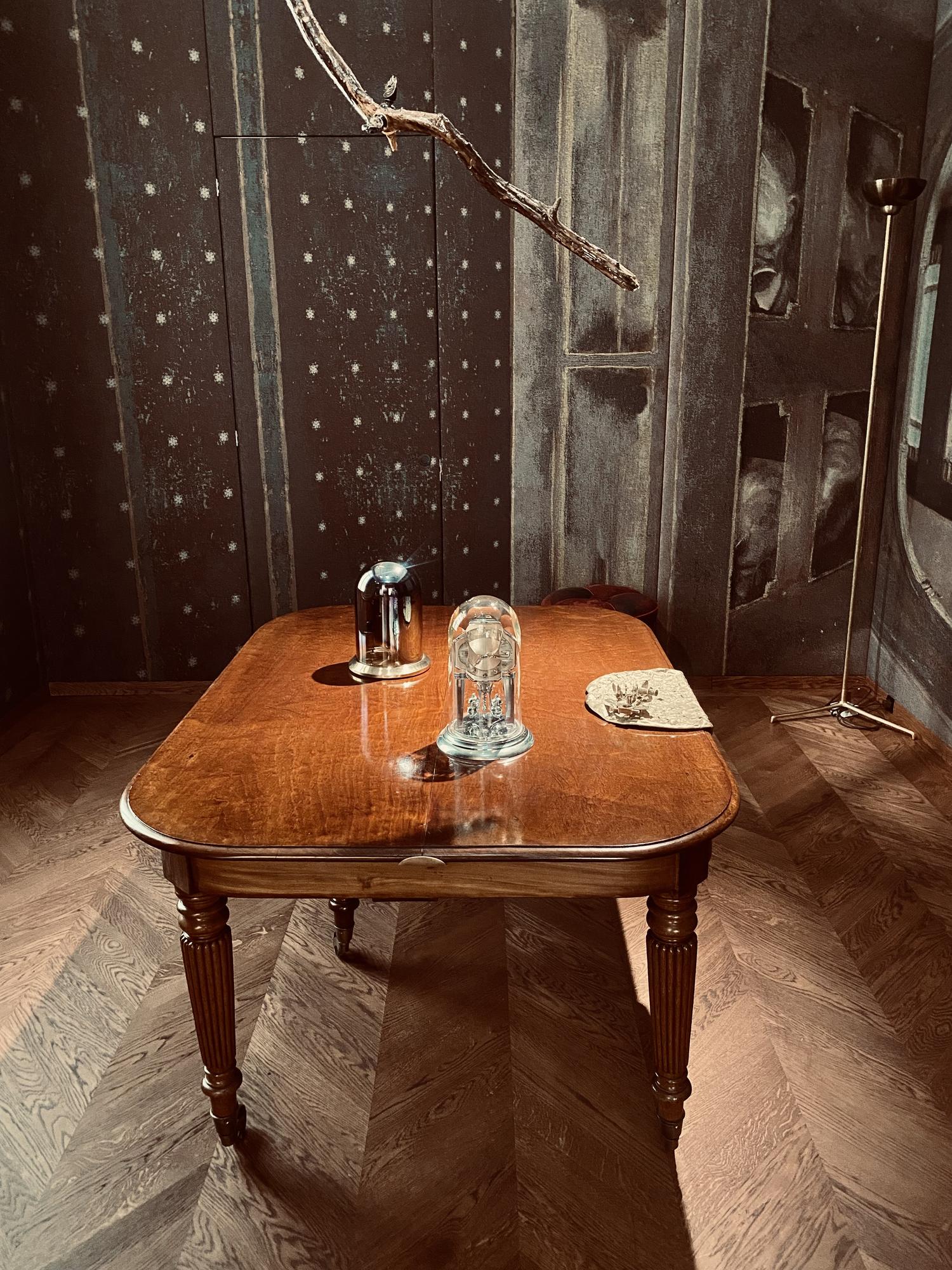
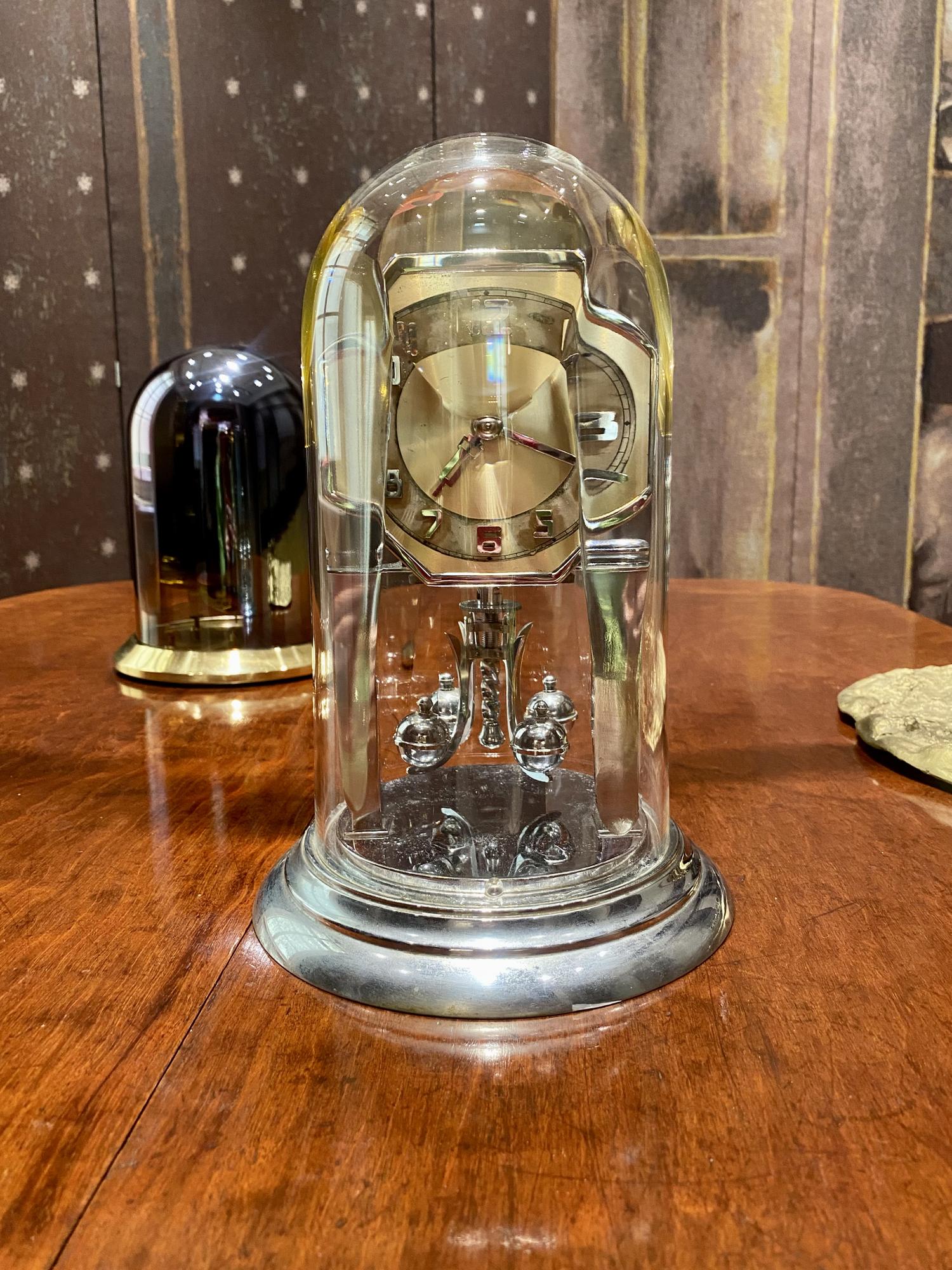
• Fragments of a beauty, 2018
Art Deco torsion pendulum clock, England (c. 1920); chrome-plated brass, bell jar, cast resin
• Against the day/Gegen den Tag, 2018
Magnetic pendulum clock of German origin (c. 1950); gold-coated bell jar; brass, glass, chrome-coated base, gold-coated finish (0.02 grams)
• Der Zweifel ist mein Antrieb, die Kante ist mein Pfad/Doubt is my drive, the edge is my path, 2018 Bronze cast of a pizza with model sextant; aluminum-bronze, brass
• Das Tier/The animal, 2020
Wood, 4 chess pieces (knights), cast resin
Foto: Heidi Horten Collection, Courtesy Manfred Erjautz
To celebrate the holiday season, the Heidi Horten Collection is presenting Manfred Erjautz’s work *Under the Weight of Light* through February 2, 2023. With his sculpture—composed of fluorescent tubes, electrical cables, and ropes—which appears to float within the museum’s architecture, the artist subverts the traditional image of the Christmas tree. The sculpture’s cool, understated quality and intense radiance simultaneously highlight its significance as a bearer of light. In the museum’s Tea Room, Erjautz is also presenting recent works under the title *Fragments of a Beauty*, which explore the concept of time at the intersection of objective measurability and subjective perception.
Clocks—both because of their physical ability to measure time and because of their aesthetic qualities—are recurring subjects in the work of artist Manfred Erjautz. In this context, the concept of time emerges at the intersection of objective measurability and subjective perception and experience.
In the work *Fragments of a Beauty*, lens-like castings in the glass dome of a pendulum clock obstruct the full view of the clock and allow only fragmentary glimpses of its movements. Despite the supposed magnification provided by the lenses, details are rendered only in a distorted manner. The interplay of reflections and refractions evolves into a symbolic counterpoint to linearly progressing time.
For the work *Against the Day*—named after Thomas Pynchon’s novel of the same name—Manfred Erjautz, in collaboration with the Institute of Solid-State Physics (Dr. Gunther Leising) at Graz University of Technology, Manfred Erjautz deposited a layer of gold molecules onto the inside of the glass cover of a magnetic pendulum clock under vacuum. Due to this coating, the glass cover now reveals only fragments and a faint silhouette of the clock inside. The time can no longer be read; the beauty of the clock remains hidden. The clock’s mechanism, however, remains intact, and its ticking manifests the inexorable passage of time.
Apocalyptic overtones can be found in the work *Der Zweifel ist mein Antrieb, die Kante ist mein Pfad*/*Doubt is my drive, the edge is my path*, which, with its disc-like form, alludes to a medieval worldview. The slipping into the void attests to an ominous future.
The four chess pieces in the work *Das Tier* (*The Animal*), in turn, appear like the Four Horsemen of the Apocalypse and reinforce the impression of the work hanging like the Sword of Damocles.